

Table of Contents
- What At-Home Beauty Gadgets Actually Do
- Microcurrent Device Benefits: What the Science Says
- Best At-Home LED Light Therapy Masks: Are They Worth the Price?
- Skincare Device Safety Standards: What to Check Before You Buy
- Are Expensive Beauty Gadgets Worth It? A Real Cost-Per-Use Analysis
- How to Choose the Right Beauty Gadget for Your Skin Type
- Verdict: Which Devices Deliver and Which to Skip
- Conclusion
Last Updated: August 15, 2026
The beauty device market has exploded in recent years, with shelves and social feeds full of gadgets promising professional-grade results at home. At Funky or Wot, we've tested and curated a range of these tools, and the honest answer to whether are expensive beauty gadgets worth it is more nuanced than most lifestyle publications will tell you. Some devices deliver genuine, measurable improvements to skin texture, collagen production, and lymphatic drainage. Others are sophisticated-looking placebo machines. Below, we break down the science, the safety standards, and the real cost-per-use maths so you can decide which tools belong in your routine.
The biggest mistake most buyers make is treating price as a proxy for performance. A £200 microcurrent device is not automatically four times more effective than a £50 one. What matters is the technology inside, the clinical evidence behind it, and whether you'll actually use it consistently.
What At-Home Beauty Gadgets Actually Do
At-home beauty gadgets are non-invasive devices designed to replicate, in a scaled-down form, treatments typically performed in clinics or salons. The category spans microcurrent tools, LED light therapy masks, ultrasonic cleansers, radiofrequency devices, dermabrasion tools, and massage instruments. Each works through a distinct mechanism: electrical stimulation, specific light wavelengths, sonic vibration, or mechanical exfoliation.

The key distinction from topical skincare is physical action. A serum can hydrate and deliver active ingredients, but it cannot stimulate facial muscles, generate heat to encourage cellular turnover, or produce photons that penetrate tissue. Devices do things creams simply cannot.
No at-home device delivers the same intensity as its clinical equivalent. Regulatory safety standards in the UK mean consumer devices operate at lower energy levels than professional equipment. This is not a flaw; it is a feature. Lower intensity means far smaller risk of adverse reactions, making them suitable for regular home use. The trade-off is that results come more gradually and depend heavily on consistency.
Microcurrent Device Benefits: What the Science Says
Microcurrent devices deliver low-level electrical currents that mimic the body's own bioelectric signals, stimulating facial muscles and supporting ATP production at the cellular level. With consistent use, the result is improved skin elasticity, a subtle lifting effect, and better lymphatic drainage. The technology has genuine clinical roots: microcurrent therapy has been used in physiotherapy for decades before the beauty industry adopted it.
Firming and Skin Elasticity: Realistic Expectations
Firming from microcurrent is real but incremental. Most users report visible improvement in facial contour after four to six weeks of regular use, typically three to five sessions per week. The effect is cumulative: skip sessions and results fade, because you are training muscle tone rather than permanently altering tissue structure. Think of it like going to the gym. Stop going, and the gains diminish.
The skin elasticity improvements are linked to microcurrent's effect on fibroblast activity, which supports collagen production over time. This is a meaningful long-term benefit, but it is not the dramatic overnight transformation that marketing photography suggests. Approach it with a six-month commitment in mind.
Lymphatic Drainage and Puffiness Reduction
Microcurrent devices deliver some of their most immediate and visible results here. The gentle electrical stimulation encourages fluid movement beneath the skin, reducing morning puffiness around the eyes and jawline noticeably within a single session. For anyone dealing with chronic facial puffiness, this alone can justify the investment.
The Funky or Wot Red Light Eye Massager (£42.75) combines microcurrent vibrations with red light therapy specifically targeting the delicate eye area, addressing dark circles, eye bags, and puffiness.
Best At-Home LED Light Therapy Masks: Are They Worth the Price?
LED light therapy masks are among the most evidence-backed devices in the consumer beauty category. Red light therapy has substantial peer-reviewed research supporting its effects on collagen production and skin barrier repair. According to the British Association of Dermatologists' guidance on phototherapy, light-based treatments have established clinical applications, and consumer versions operate on the same principles at lower intensities.
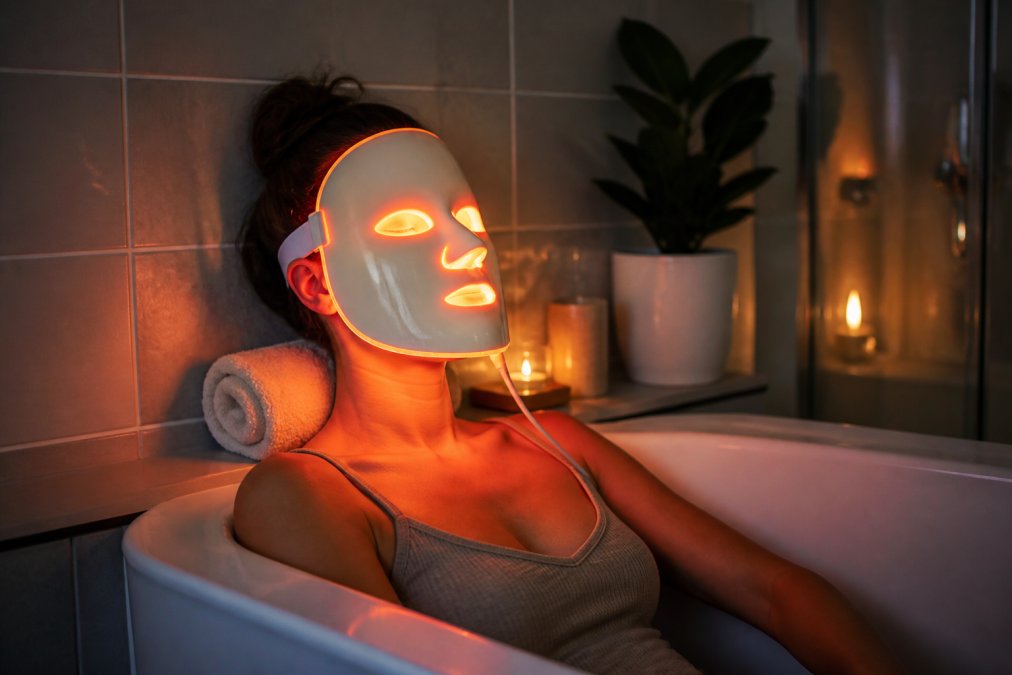
The question is not whether LED therapy works. It does. The question is whether a specific device delivers enough photon energy at the right wavelength to produce meaningful results.
How Wavelength and Photon Count Affect Results
Wavelength determines which skin concern a device addresses. Red light (typically 630-660 nanometres) penetrates deeper and supports collagen production and anti-aging benefits. Blue light (around 415-430 nanometres) targets surface bacteria and is effective for acne management. Amber and near-infrared wavelengths address brightening, hyperpigmentation, and deeper tissue repair.
Photon count matters because more LEDs at consistent wavelengths mean more even coverage across the face. A mask with 287 LEDs covers significantly more surface area than one with 36, reducing treatment time and improving consistency of results. The 7 Colors PDT Photon Light Therapy LED Face Mask (£34.52) from Funky or Wot uses 287 high-intensity LEDs across seven wavelengths, covering the full spectrum of common skincare concerns.
| Light Colour | Wavelength Range | Primary Benefit |
|---|---|---|
| Red | 630-660 nm | Collagen production, anti-aging |
| Blue | 415-430 nm | Acne, bacteria reduction |
| Yellow/Amber | 570-590 nm | Brightening, hyperpigmentation |
| Near-infrared | 800-850 nm | Deep tissue repair, circulation |
| Green | 520-530 nm | Pore refinement, oil control |
| Cyan | 490-510 nm | Skin barrier support |
| Purple | 380-420 nm | Combined anti-acne and anti-aging |
Scientific Validation vs. Marketing Hype
The science behind LED light therapy is solid at clinical intensities. Consumer devices vary enormously in quality. A device claiming "professional-grade" results at £25 with 36 LEDs is almost certainly underselling its limitations. Look for devices with a high LED count, multiple wavelength options, and a treatment time recommendation of 10-20 minutes per session. Devices promising results in under five minutes are trading on marketing rather than physics. Consistent use three to five times per week over eight to twelve weeks is the realistic timeframe for visible brightening and texture improvement.
Skincare Device Safety Standards: What to Check Before You Buy
Skincare device safety standards in the UK are governed by the General Product Safety Regulations 2005, which require all consumer goods sold here to be safe for their intended use. Electrical beauty devices must carry CE or UKCA marking, confirming they meet relevant electromagnetic compatibility and low voltage directives. Before buying any device, check for this marking.
According to the Office for Product Safety and Standards guidance on electrical products, consumers should verify that devices sold online meet UK conformity requirements, particularly when purchasing from marketplace sellers.
Contraindications and Medical Considerations
Microcurrent devices: Not suitable for anyone with a pacemaker, metal implants in the face or neck, epilepsy, or pregnancy.
LED light therapy: Generally well-tolerated, but those with photosensitive conditions (including lupus) or those taking photosensitising medications should consult a GP before use.
Radiofrequency and ultrasonic devices: Not recommended during pregnancy, over active acne breakouts, or on skin with broken capillaries.
Dermabrasion tools: Should not be used on active rosacea, open wounds, or skin affected by eczema or psoriasis.
If you have any diagnosed skin condition, a 10-minute conversation with a dermatologist before investing in devices is time well spent.
Are Expensive Beauty Gadgets Worth It? A Real Cost-Per-Use Analysis
The cost-per-use calculation separates a genuine investment piece from an expensive impulse purchase. A device that costs £150 but gets used three times per week for two years works out to roughly 31 pence per session. A £30 device used twice and abandoned costs £15 per use.
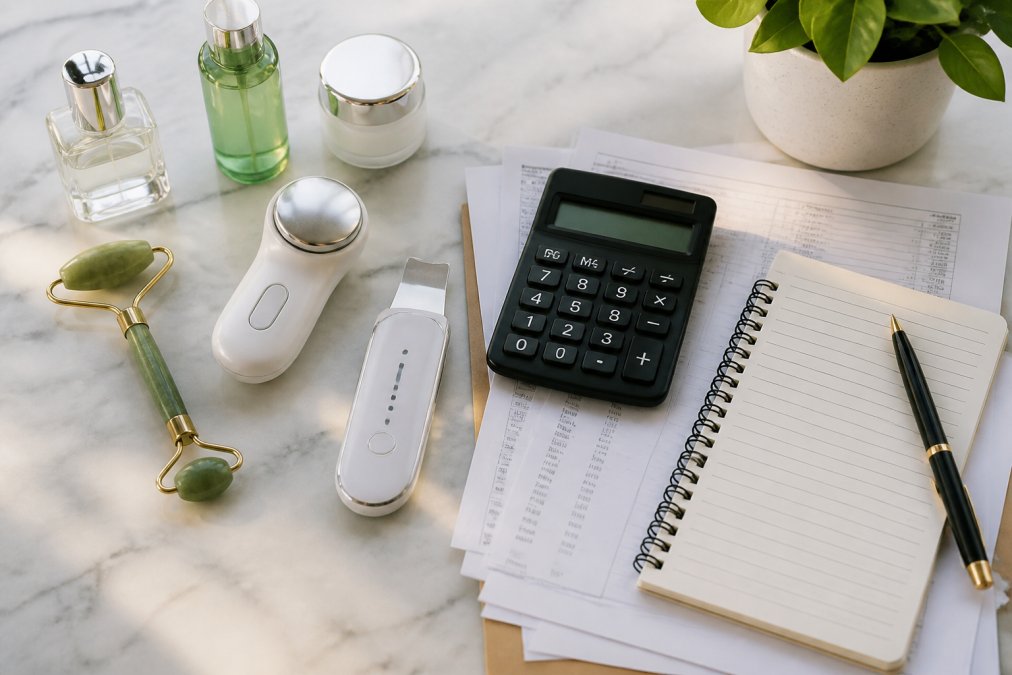
The honest answer to whether are expensive beauty gadgets worth it comes down to three factors: clinical evidence for the technology, your skin type and specific concerns, and your realistic usage habits. A £200 device you use daily is worth it. A £40 device that sits unused is not.
| Device Type | Typical Price Range | Sessions Needed to See Results | Cost-Per-Use (2x weekly, 1 year) |
|---|---|---|---|
| LED Face Mask | £30-£200 | 8-12 weeks | £0.29-£1.92 |
| Microcurrent Tool | £50-£300 | 4-6 weeks | £0.48-£2.88 |
| Dermabrasion Vacuum | £25-£80 | 2-4 weeks | £0.24-£0.77 |
| Sonic Cleanser | £30-£150 | Immediate improvement | £0.29-£1.44 |
| Gua Sha/Massage Tool | £15-£80 | 2-4 weeks | £0.14-£0.77 |
Professional Treatments vs. At-Home Devices
A single professional LED facial typically costs £60-£120. A professional microcurrent facial runs £80-£150. At-home devices do not match clinical intensity, but they allow far greater frequency of treatment. Treating yourself three times per week at home for a year delivers roughly 150 sessions. For maintenance between professional appointments or as a standalone routine for mild-to-moderate concerns, at-home devices offer strong value.

Sustainability and E-Waste: The Hidden Cost
Many beauty devices use lithium-ion batteries that cannot be easily recycled through standard household waste. In the UK, the Waste Electrical and Electronic Equipment (WEEE) Regulations 2013 require retailers to offer take-back schemes for electronic products. When purchasing any device, check whether the retailer participates in a WEEE scheme.
The longer a device lasts, the better its sustainability profile. Rechargeable devices with USB charging are preferable to those requiring disposable batteries. The Diamond Microdermabrasion Blackhead Remover Vacuum (£31.83) includes six interchangeable suction tips and USB recharging, both of which extend the device's useful life.

How to Choose the Right Beauty Gadget for Your Skin Type
Matching device to skin type is where most buyers go wrong. The wrong tool does not just underperform; it can actively worsen certain conditions.
Oily or acne-prone skin: Blue LED light therapy and sonic cleansers are your best starting points. Avoid high-suction dermabrasion tools during active breakouts.
Dry or dehydrated skin: Red LED therapy supports the skin barrier and collagen production without stripping moisture. Avoid dermabrasion tools used too frequently.
Mature skin concerned with firmness: Microcurrent devices and radiofrequency tools are the most targeted options. The Smart Relax Gua Sha Massager (£24.84) combines traditional gua sha benefits with electric cervical meridian technology to improve circulation and support tissue firmness.
Sensitive or reactive skin: Start with the lowest-intensity tools. LED therapy at red wavelengths is generally the safest entry point.
Hyperpigmentation or uneven tone: Amber and near-infrared wavelengths are specifically targeted at brightening and cellular turnover.
According to the British Skin Foundation's guidance on skincare devices, matching device intensity to skin sensitivity is one of the most important factors in both safety and efficacy.
Verdict: Which Devices Deliver and Which to Skip
Not all beauty gadgets are created equal, and the honest verdict varies sharply by category.
Worth the investment:
- LED light therapy masks with 200+ LEDs and multiple wavelengths. The technology is genuinely evidence-backed, the cost-per-use is low, and the risk profile is minimal for most skin types. The 7 Colors PDT LED Face Mask at £34.52 sits at an accessible price point for a 287-LED device.
- Microcurrent tools for anyone committed to a consistent routine. Results are real but require patience and frequency. Best for those with specific concerns around skin elasticity and facial contour.
- Dermabrasion vacuums for pore refinement and blackhead removal. Results are immediate and visible, which supports consistent use. The Diamond Microdermabrasion tool at £31.83 offers genuine pore cleansing functionality.
- Targeted eye massagers combining red light and microcurrent for puffiness and dark circles. The Red Light Eye Massager at £42.75 addresses a specific concern that topical products often struggle to shift.
Approach with caution:
- Single-modality devices at high price points without clinical evidence. A radiofrequency wand priced at £300 from an unverified brand deserves scepticism.
- Devices promising dramatic results in under two weeks. Collagen production and genuine cellular turnover take time.
Skip entirely:
- Devices without UKCA or CE marking, no stated wavelength specifications for LED tools, or no listed contraindications. These are red flags for both safety and quality.
The Funky or Wot approach focuses on devices with clear functional specifications, genuine technology backing, and accessible price points. Whether beauty gadgets worth buying depends on selecting the right technology for your concern and committing to consistent use. Browse the full beauty device collection at Funky or Wot and find the tool that matches your skin type, your routine, and your budget.
Frequently Asked Questions
Do at-home LED masks actually work for acne and ageing?
LED light therapy masks can produce noticeable improvements in skin texture, hyperpigmentation, and fine lines with consistent use over several weeks. Red wavelengths support collagen production and cellular turnover, while blue wavelengths target acne-causing bacteria. Results depend heavily on the device's LED count, wavelength accuracy, and how regularly you use it. A 287-LED mask used three to four times per week is far more likely to deliver visible change than occasional sessions with a lower-powered device.
How long does it take to see results from beauty gadgets?
Most at-home beauty gadgets require four to eight weeks of consistent use before results become visible. Microcurrent devices and LED masks both work by gradually stimulating collagen production and improving skin elasticity over time. Pore-cleansing tools and microdermabrasion devices tend to show faster results, often within a few sessions, because they physically remove dead skin cells and debris. Consistency matters more than intensity, short, regular sessions outperform occasional marathon treatments.
Do beauty gadgets comply with safety standards like the UKCA mark?
Any beauty device sold in Great Britain should carry the UKCA mark, which confirms the product meets the relevant UK product safety regulations. This is the post-Brexit equivalent of the CE mark and applies to electrical beauty tools including LED masks, microcurrent devices, and sonic cleansers. Before purchasing, check that the product listing references UKCA or CE certification. Devices without any conformity marking have not been independently assessed and carry a higher risk of skin sensitivity reactions or electrical faults.
Are there affordable alternatives to high-end beauty tools?
Yes. Many effective at-home devices sit well below the £100 mark. A derma face roller at £4.14 stimulates collagen production and boosts serum absorption without any power source. A 287-LED photon mask at £34.52 offers multi-wavelength LED light therapy comparable in function to devices costing several times more. The key is matching the device to a specific skincare concern rather than paying for brand prestige. Mid-range tools with verified LED counts and suction levels often outperform expensive alternatives in practical, daily use.
What should I look for before buying a luxury beauty gadget?
Check for UKCA or CE certification first. Then look at the specific technology: LED count and wavelength for light therapy masks, suction levels for pore cleansers, and temperature range for heated devices. Avoid products that rely on vague claims without specifying technical specifications. Consider cost-per-use by dividing the purchase price by the number of expected sessions over one year. A £35 device used 200 times costs 17p per session, often far less than a single professional facial treatment.
This article was written using GrandRanker